British Council – STEP Programme

British Council - STEP Programme

Sub-Saharan Africa

2022 - 2026

Nigeria

Countries

Nigeria

Lead M&E Consultant(s)

Dr Nicky Hockly & Gavin Dudeney

Project Overview

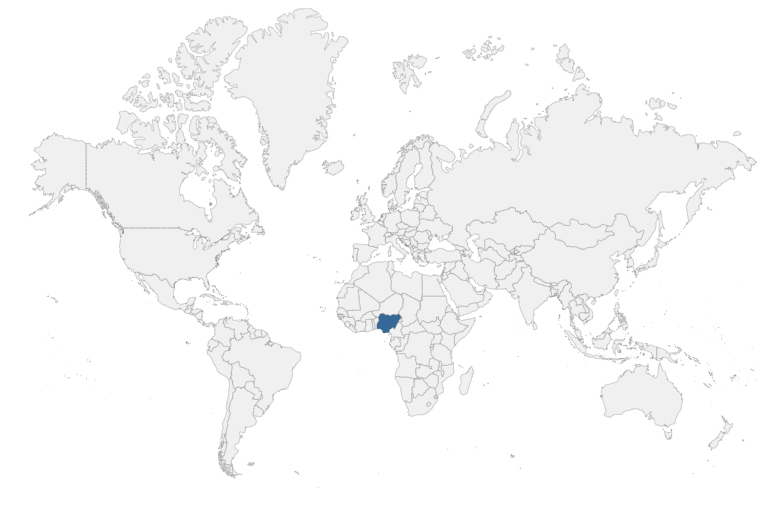
The STEP programme is a British Council professional development initiative in Nigeria, designed to improve the English language proficiency and pedagogical skills of primary and secondary school teachers. The programme relies on a hybrid delivery model: in-person training for initial units, followed by self-study supported by WhatsApp-based Communities of Practice (CoPs) led by Master Trainers. TCE carried out two impact evaluations of STEP between 2022 and 2026. Evaluation 1 (2022-2023) focused on STEP training delivered in Kaduna State to (i) 60 Master Trainers; (ii) 6,000 primary teachers using print and SD card STEP materials; and (iii) 500 College Lecturers piloting the materials online in an LMS, with comparisons drawn between the effectiveness of f2f and online modes of delivery. Evaluation 2 (2025-2026) focused on in-service teachers in six Nigerian states to evaluate the impact of STEP on classroom practices, as well as six Colleges of Education piloting STEP training for pre-service teachers.

Approaches & Outputs

Both evaluations employed a mixed-methods design. In both evaluations, the TCE team developed an M&E logframe and evaluation instruments to collect qualitative and quantitative data, including classroom observation protocols aligned to British Council KPIs and teaching frameworks, and trained local Nigerian consultants to implement these. TCE trained STEP Master Trainers and British Council staff to set up and support online Communities of Practice (CoPs) in WhatsApp and Telegram, and provided ongoing CoP support to MTs for the duration of the project. Data analysis included LMS, pre-and post-test scores, classroom observation data and CoP data, as well as FGD and KII data. Innovative approaches to data analysis were undertaken, including sentiment analysis of large WhatsApp group interactions. Final outputs included a STEP Theory of Change aligned to teacher development research, a STEP Log frame, a STEP MEL Toolkit for future evaluations, and a course registration system, as well as inception, progress and final evaluation reports and PowerPoint presentations of findings to key stakeholders.

Impact On

9,000+ STEP-trained primary school teachers across Nigeria, 40+ STEP Master Trainers, Colleges of Education and hundreds of pre-service teachers, and tens of thousands of Nigerian primary school learners.

Challenges

The largest obstacles to the STEP self-study phase and CoP participation are the high costs of mobile data, poor internet connectivity, and inconsistent power supplies to charge devices. These digital challenges also affected the collection of evaluation data online, such as remote interviews with high-level stakeholders; however, using WhatsApp for semi-synchronous communication via voice notes recorded in not-quite real time mitigated this challenge.